How visual regression testing works
From CI upload to a green check: how UI Verify renders every component in a real browser, diffs it against its baseline, and has an AI judge triage each change.
UI Verify runs as a single step in your CI. You hand it an archive from your Vitest or Playwright tests, or a built Storybook; it does the rest in the cloud and reports back on the pull request. For a Storybook build it also runs each story's interaction testing play function before capturing, so the snapshot is of the settled, interacted state. Here is what happens between the upload and the check.
The pipeline
- Your CI runs
uiverify uploadwith your Vitest or Playwright archive, or your built Storybook. - UI Verify ingests the build and resolves the baseline for each story from its branch history.
- A fleet of workers renders every story in a real browser and diffs it against its baseline.
- An AI judge reviews each changed story and labels it a likely regression or a likely intended change, with a reason.
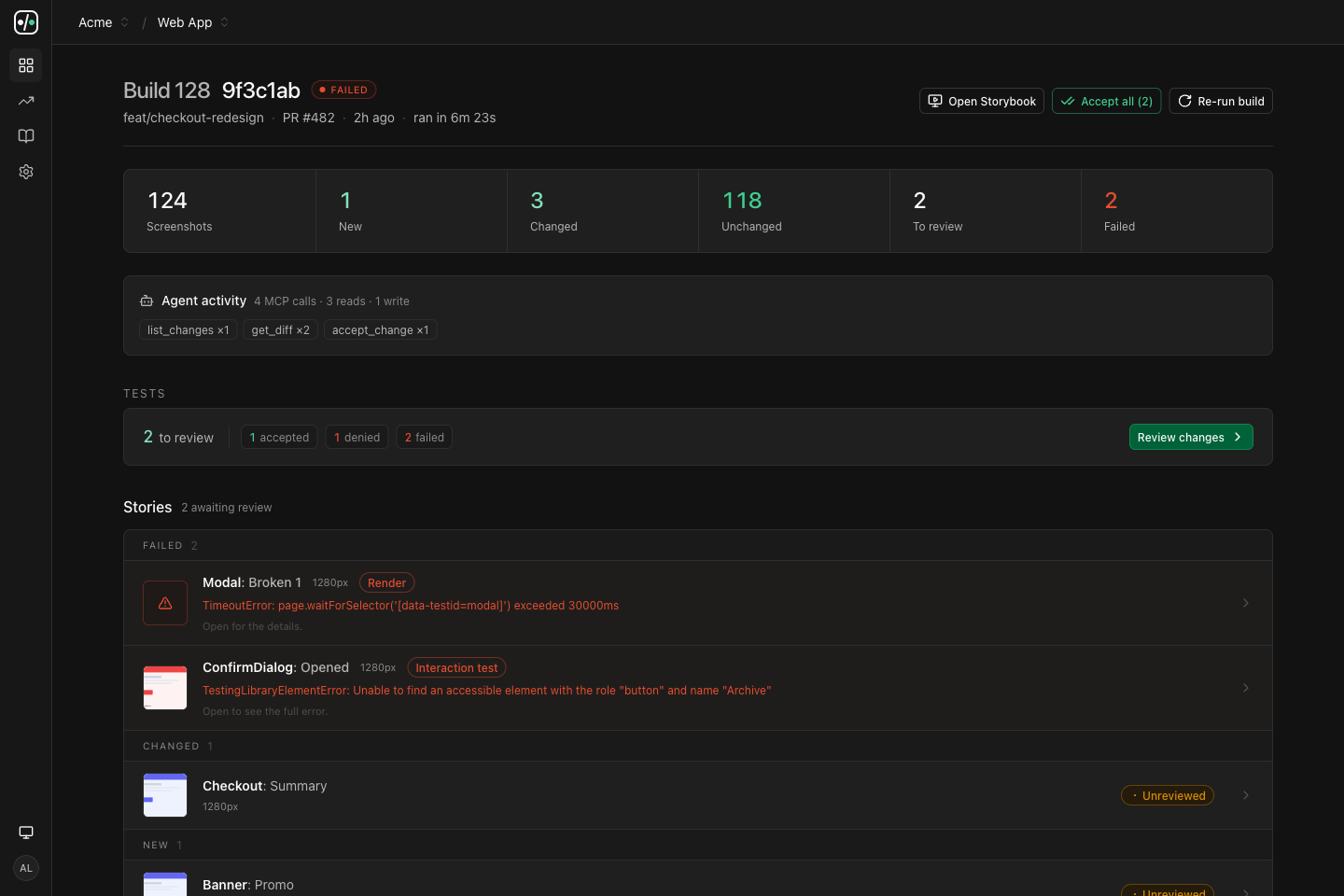
- A check and a comment land on your PR, with the changes grouped and pre-sorted for review.
The review model
Baselines are per branch. A change stays a change until a human, or an agent you authorized, accepts it - and accepting is what sets the new baseline. Nothing updates itself behind your back, which is what keeps a green build trustworthy. See Baselines and branches.
Where it runs
Everything after the upload happens in the cloud. There are no browsers to install in CI, no snapshot images committed to your repo, and no local render farm to babysit. Your pipeline stays one step.
Set up visual testing
From no visual tests to a green check on every pull request.
Visual testing for agents
UI Verify captures your UI on every pull request and an AI judge tells an intended change from a real regression. See how it works.
Get started